Your competitors are all buying the same robot.
SOLD OUT
Every seat spoken for.
Plans change, though. They always do. When somebody cancels, I call the waitlist and that room is claimed before the day is over.
Get on the list and two things happen. You get the call if an October seat opens. And you're first in line for 2027 when those dates drop.
Your competitors are all buying the same robot.
Which means the last real advantage left in your market will be the one thing AI can't fake.
Discover the system that keeps the customers you already paid for, turns them into referrals you aren't getting, and lets you charge more than the guy down the street.
Four days at Disney's Grand Floridian, October 25-28, 2026
You'll build the system in the room, before you go home.
Right now, somewhere in your market, a competitor is wiring AI into his phone system.
Another one is running his marketing with it. His quotes and customer review requests. Probably his thank-you notes.
I'm not going to tell you that's all a mistake. Some of it works, and I use some of it myself.
I'm going to tell you what happens next, because it’s already started.
Inside of a year, every business in your category will have bought the same tools from the same vendors and fed them the same scripts. Your competitors will sound like you. You'll sound like them. Everybody in town will answer the phone inside of two rings with a polite, helpful, perfectly grammatical voice that came out of a server farm in Virginia.
And your customer won't be able to tell one of you from another.
When that day gets here, one thing will be left that a customer wants and AI can’t counterfeit:
What it feels like when an actual human being takes care of them.
Here's where most business owners get it wrong. They think that experience comes down to hiring nice people and hoping for the best.
It doesn’t. It must be engineered. Written down, trained, measured, and then repeated by a 19-year-old on his third day of work.
I know it can, because I helped run the operation that does it better than anybody on the planet.
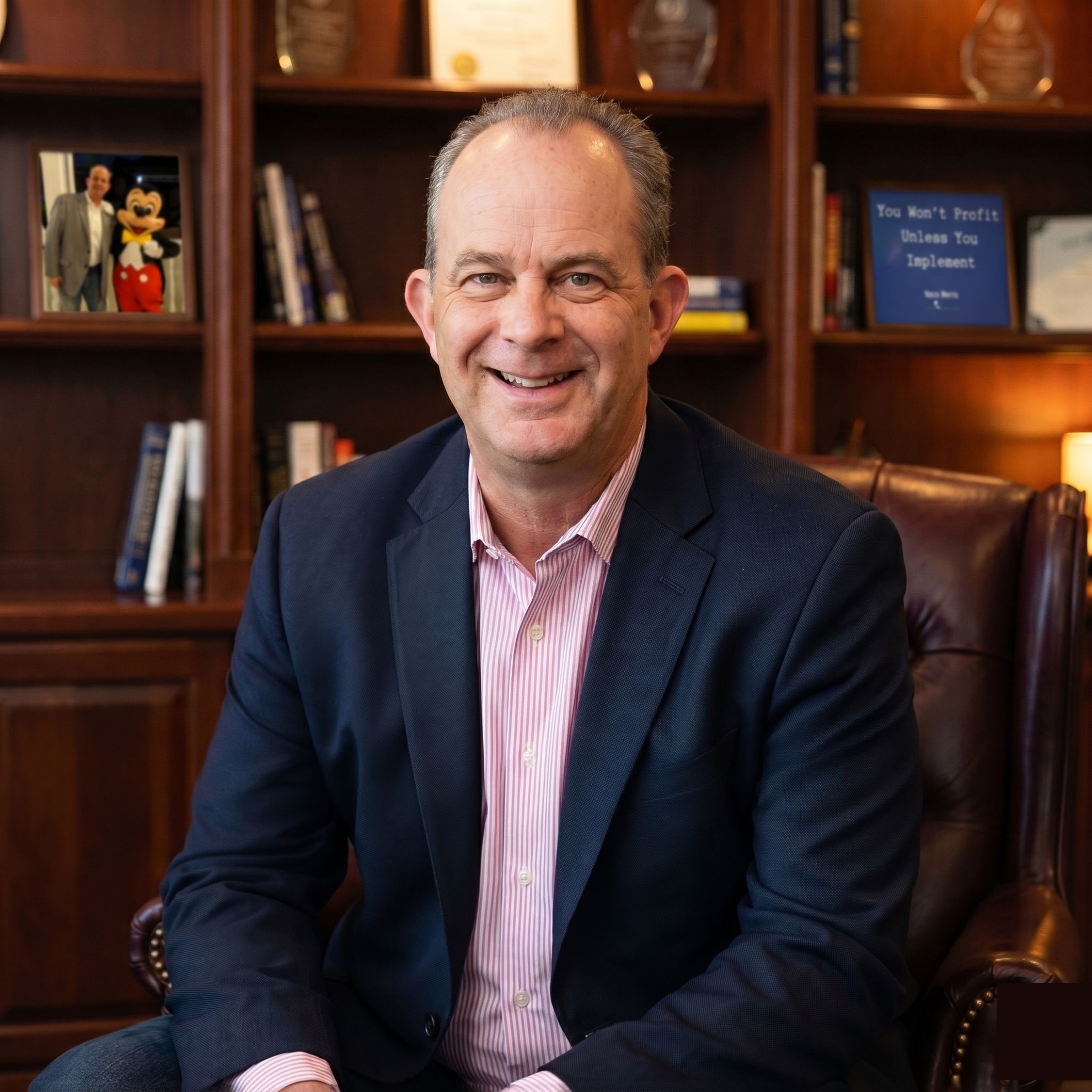
I spent years inside Walt Disney World's operations.
Out in the resorts, running them, on the floor at 2 AM when something broke.
Then I left and started a service business of my own, cleaning carpets for affluent homeowners in Maryland.
That’s where I learned to turn Disney theory into money.
Here are two numbers from my QuickBooks account:
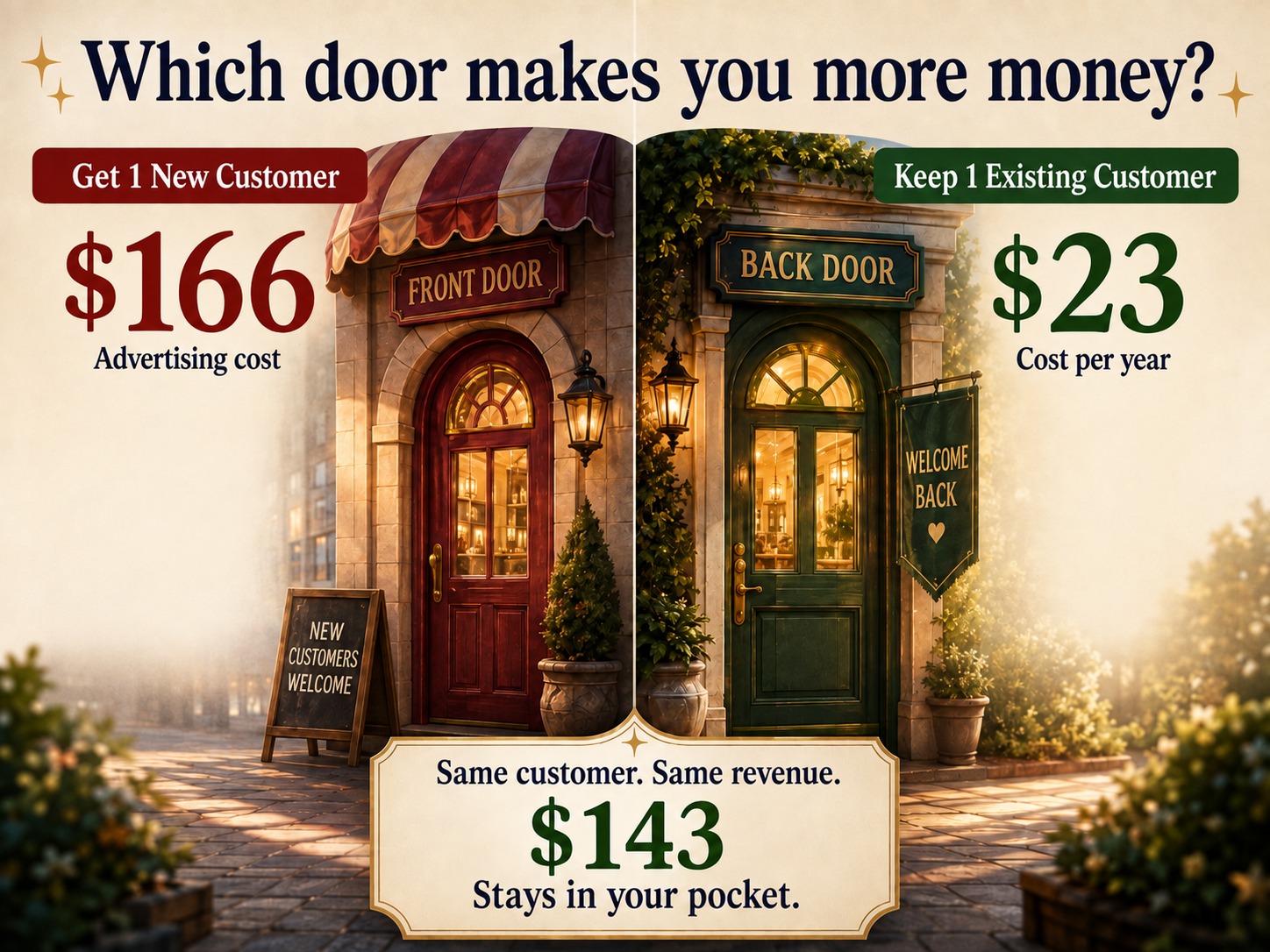
It cost me $166 in advertising to get one new customer through the door.
It cost me $23 a year to keep a customer I already had.
Same customer. Same revenue. But $143 more in my pocket every single time.
That one comparison changed how I ran my business. Dollar for dollar, I made more profit serving five customers I already had than chasing after 20 I didn't.
Disney worked this out decades ago.
Roughly 80% of people walking through the Magic Kingdom turnstiles today have been there before. Disney built the most famous marketing machine in the world, and now makes most of its money without advertising.
Now think about your business.
How much does an average customer spend with you in a year?
How many years do they normally stay with you? Multiply those two numbers.
That’s how much one lost customer costs you. It’s a chunk of change, isn’t it?
THE CUSTOMER YOU'RE
ABOUT TO LOSE
Now, about those customers of yours.
Somewhere in your business is a customer who used to love you. They paid without grumbling over price, sent you referrals, and were easy to work with.
But they’re leaving you.
They just haven't told you yet.
Maybe a call didn't get returned (again). Maybe the invoice showed up with a line nobody mentioned. Maybe somebody on your team was short with them on a Tuesday, or the truck came two hours late and nobody phoned ahead to say so.
Whatever it was, they left you in their head a while ago.
You don’t get to know who that person is. There's no exit interview. Nobody calls to resign. You find out when the revenue is missing and you’re sitting there trying to remember the last time you heard from them.
That’s expensive in any year but it’s worse today. You’ve seen the news headlines: it’s all wars, protests, and people worried that AI will take their jobs.
Consumer confidence is down 10% from 2025. People are holding onto their wallets. And the cost of buying a replacement customer is only going up.
WHY IT KEEPS HAPPENING
Nobody ever gave you the rules.
Which makes the customer you already have the cheapest one you'll ever get.
So why do they leave?
Customers leave because nobody in your business knew what was supposed to happen when things went sideways. They don’t leave because you hired bad people.
There was no rule for the call that comes in at 4:50 PM. No standard for the truck running 90 minutes late. So, your people guessed, and that day, they guessed wrong.
It’s not their fault or yours. You never wrote down the rules. Because nobody ever handed you any rules to copy, and nobody teaches that stuff. Not in any school, not in any Instagram reel, and not in the book you bought about hiring A-players.
Disney wrote their rules and standards down decades ago. It's the only reason a kid three weeks into the job can take care of a family from Ohio the same way a 30-year veteran can.
I took those rules home, cut them down to size, and used them in my Maryland business for 20 years. That's why my cost to keep a customer is only $23 a year.
Here's the problem: You can't come up with these rules sitting at your desk. I've watched owners try it. You block out a Friday afternoon, get 20 minutes in, the phone rings … and that’s the end of that. Nothing changes.
So you don't do it at your desk.
You do it in four days, in the one place on earth where you can watch the machine that runs on those rules, while you build your own.
Making the Magic 2026 at Disney's Grand Floridian, October 25-28, 2026
Thirty business owners, and me.
Four Questions Everybody Asks Me. I'll Let the People Who Already Went Answer Them.
Question 1: "Will this actually translate to my industry?"
Ben Glass is a lawyer, and he coaches lawyers. If you're looking for one industry least likely to benefit from anything Disney does, lawyers may be it.
"If legal can translate Disney principles into a better client experience in order to have a more profitable business, I don't care what your business is. You'd be able to do it too."
Ben Glass, Great Legal Marketing
Question 2: "Will I actually do anything when I get home?"
You're right to ask that. Shawn Perkins walked in with the same worry.
"You will go home with a list of things to implement, but the key is to take that one thing that you learn and put that into practice, and then worry about the rest of them. If you do that, your money will be so well spent, you will never look back."
Shawn Perkins, Principal Shield Financial
Question 3: "I already know Disney. What am I going to see that I couldn't see myself?"
Mike Crow brought 20 of his members, plus his marketing person and project manager. He's a Disney guy. He comes here constantly.
"I know a lot about Disney, but I learned things that I never knew. It was so cool to sit around the table one evening and talk with two Disney executives that are in it every single day. They talked about hiring and firing. What I saw was a whole new level inside of Disney."
Mike Crow, Millionaire Inspector Community
Question 4: "Is this thing well run, or am I spending four days wandering around in Florida?"
Kris Murray put her members and her reputation in my hands.

"We not only sold out the event from stage in just a few minutes, we oversold it to the point where we had to add another trip. Everything was turnkey for me as the host. If you're looking for an easy, high value, and fun event for your niche, this is a home run."
Kris Murray, Childcare Success Academy
You're Not Going Home with a Notebook
Most events send you home with one, plus good intentions. I've sat in those rooms too, and I know exactly what happens to the notebook... nothing.
Instead, you're going to build three things here, with me looking over your shoulder.
1. Your Customer Experience Map.
Every touch point a customer has with your business, from the first ad they ever saw to the invoice they pay eight months later, drawn out on paper where you can finally see all of it at once. The phone call. The voicemail nobody returns. The estimate. The tech who shows up. The follow-up that never happens.
Then we walk them one at a time and ask two questions. What does this feel like right now? And what should it feel like instead?
2. Your Service Standards.
The rules that make sure your people deliver a Disney-level customer experience whether you're in the building or not.
This is the part most owners have never attempted, because writing down "be friendly" is useless and everybody knows it.
Example: Disney doesn't tell Cast Members to "be friendly."
One of its actual service guidelines says: "Make eye contact and smile. Greet every guest. Use cheerful words such as 'good morning' and 'welcome.' Do not hide from guests, seek them out. Offer help."
Now translate that into your business.
Don't tell your front-desk person to "be friendly."
Tell them: When a customer walks in, look up from what you're doing, make eye contact, smile, greet them before they greet you, and ask how you can help.
Now you've got a standard. You can teach it. You can observe it. You can correct it. And a new employee can do it on day three without having to guess what "friendly" means.
3. Your Disnify Your Business Monday Morning Plan.
Specific and sequenced. What you do the first morning you're back at your desk, and then the morning after that. Not a philosophy. A list, in order, with your handwriting on it.
All three are built on the 7 Magic Keys, which is the framework I pulled out of Disney and rebuilt for businesses that don't have 75,000 employees and a castle.
The 7 Magic Keys are:
1. Details, details, details
2. Service Standards
3. The WOW Factor
4. Employee Magic
5. Environment
6. PRocess
7. Bringing it all together
You get the first of them Monday morning in the classroom. Then we walk straight into EPCOT and I show you all of them running live.
What you take home, and what you're allowed to do with it.
All three documents are yours. You can copy them, hand them to your team, and train your own people out of them. That's what they're for.
"As soon as I get home, I am going to implement Vance's customer experience map, doing a whole mind map of all the touch points that our customers and clients have."
Caleb DeLon, Paperback Expert
Three things...
and then I'll stop talking about myself.
I worked inside Walt Disney World's operations: Food & Beverage Manager at Disney’s Contemporary Resort … All Island Duty Manager at Pleasure Island … Service Trainer aboard the Empress Lily … and on the opening team of the Yacht & Beach Club Resorts.
Then I started an ordinary carpet-cleaning business and spent the next 20 years using what I'd learned to make money in it … with employees who call in sick and customers who complain. To the point where my business is now in a position to sell for life-changing money, because it runs on world-class systems.
Dan Kennedy's marketing group, GKIC, named me their Marketer of the Year for three years running, and nobody ever held it longer.
And I've never once failed to sell this event out. That includes 2020, when the world was closed and my group sat in the classroom in masks.
Four Days. Here Are the Details.
Sunday, October 25: Arrival
Check in at Disney's Grand Floridian.
Welcome dinner at the California Grill. Seven courses with wine pairing, overlooking the Magic Kingdom, timed to the fireworks.
Monday, October 26: The classroom and the walking classroom
Morning: The Making the Magic classroom, where you get the first of the 7 Magic Keys.
Afternoon: a guided walking tour of EPCOT, where everything from the morning is running live in front of you.
Evening: Private VIP fireworks viewing and dessert reception during Luminous, the EPCOT nighttime show.
Tuesday, October 27: Backstage and build
Morning: A private guided backstage tour of the Magic Kingdom. You go underground and see how it actually works.
Afternoon: The remaining Magic Keys, then your personal strategy session. you walk out with a written plan for Disney-fying your business, ready to start Monday morning.
Evening: Dinner and the Fantasmic show at Hollywood Studios.
Wednesday, October 28: The Mastermind
Every attendee is in the room. You spend the morning working on your business with me and a group of sharp business owners. We go beyond the plan you built Tuesday and create the breakthroughs that only happen in a room like this, in a place like this.
Thursday, October 29: Checkout
Go home and start profiting from it.
About the pace, since somebody always asks.
It's a full schedule. Mornings start at 7:30am and most days run to dinner. But you have plenty of breaks. Monday and Tuesday both wrap around 10:00pm, which is when your family gets you back, and Wednesday finishes at midday with your room already paid for that night. Most people spend Wednesday afternoon in a park, but your time is your own.
Three things on the Agenda are not for sale, at any price.
Call Disney with a credit card in your hand and here's what you CANNOT get:
You cannot buy this backstage tour. Disney sells a public backstage tour and it's a good one. This is not that. This is designed for entrepreneurs and business owners to show you what a world-class experience looks like from the inside, so you can implement it faster with your team.
You cannot buy the VIP fireworks reception, where your own family stands beside you instead of 30,000 strangers.
You cannot buy the exclusive dinner at the California grill or the dinner at Fantasmic.
These are my gifts to you, built from years of relationships I still have on the inside of Disney.
So what does it cost?
$1,997 for one person in a room.
$2,497 for two people sharing a room.
That second number is only $1,248 apiece, and it's a smart move if you can make it.
Now, compare those numbers to these:
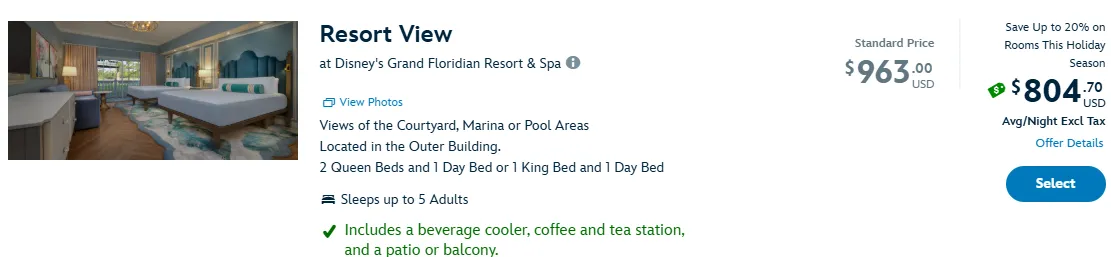
One night at the Grand Floridian in October is $804.
Four nights are $3,216.
That's just for the room. No food, no parks, no training, no me. Just a bed with a roof over it.
Which raises the obvious question.
Why is it only $1,997?
Fair question, and here's the answer.
I locked in four nights at the Grand Floridian for October 25 through 28 as part of a much bigger program. The program changed in July.
But Disney isn't in the business of refunding a block of rooms because my plans changed, so I had two options. Eat the cost and watch the rooms sit empty, or open a smaller number of seats at a number that fills them fast.
I took the second one.
Nothing about the event got smaller. Not the training, not the backstage access, not the meals.
What got smaller is the guest list, which means more of me per person, not less.
But it isn't $1,997. It's four days.
Let's answer the real question.
If you're still reading this, the money isn't what may stop you from attending. Four days out of your business is.
Look, I ran a service business. I know exactly what four days away feels like. I know about the phone, and the crew, and the one customer who always picks the week you're gone.
So here's my honest case for it.
First, this cannot be done at your desk.
Because what you're going to build requires you to look at your business from the outside, and you cannot get outside it while you're sitting inside it. Every owner who has tried to map his customer experience on a busy afternoon between phone calls ends up with the same thing, which is half a map and an interrupted phone call.
Second, you cannot study a service machine off a slide.
Monday afternoon we walk into EPCOT and I show you the systems running live on 50,000 people. You may see a service failure get recovered. You may see someone get talked out of a bad mood in 11 seconds by a teenage Cast Member. And I'll tell you which rules are being followed when it happens.
Reading about that does nothing for you. Seeing it happen can change how you look at your own business for the rest of your life.
Third, 29 other business owners.
You've got your own reasons for coming. Shawn Perkins came for systems and went home with them ... along with a decision to write a book. That decision came from a conversation with another attendee, not out of anything I taught. it's almost impossible to come to the most creative place on earth and not go home with more than you expected.
Here's everything in it.
Four nights at Disney's Grand Floridian. Value $3,216
Four days of facilitation with me, building your own service system. Value: $7,997
VIP reception and VIP viewing of the EPCOT nighttime show. Value: $375
All meals, and we eat well. Value: $1,450
Walt Disney World park tickets. Value: $458
TOTAL VALUE: $13,496
YOUR PRICE: $1,997
Also included, and their value can't be priced:
Guided field experiences across the Walt Disney World Resort, including the backstage tour with my lessons in experience delivery you can't get anywhere else.
Your resources, guides, blueprints and workbooks, which give you priceless speed to implement on Monday morning.
Plus, you get my help to implement after the event, with 90 days of coaching, 90 days of my Insiders Circle community, and the XPerience Report printed newsletter. So you're never left wondering what to do next.
The other way to learn this is from Disney itself. Let's look at this as an option:
The Disney Institute runs multi-day experiential programs. As of this writing, there's is $7,425. Then you need a hotel, call it $3,200, and park tickets, at least $500. So you're at roughly $10,125 to attend, and sleeping off property.
Their classes are also large. Fifty of 75 people in a room is normal. The program is scripted, with very little deviation and almost no one-on-one time with the facilitator.
I'm not here to bash my former employer. The Disney Institute is a fine training facility and they share Disney's philosophies honestly. But it's been sanitized for public consumption.
I hold nothing back. Thirty people instead of 75. And when you ask me an uncomfortable question about what really happns when a cast member gets fired, you get a real answer.
About September 15 ...
There's no countdown clock on this page and no fake deadline. I don't need one, because September 15 is the day I had Disney my final room list.
Any seat not claimed by then goes back to Disney that afternoon, and Disney resells them at $804 a night. The Grand Floridian is the most booked property at Disney World.
I don't control that date. Disney put it inthe agreement.
Every year somebody calls me in October. I tell them the truth, which is that I'd like to get them in and there's nothing left to get them into.
30 rooms ... and 11 are gone. Only 19 left.
Enroll now and you go early.
Wednesday morning is the Mastermind, and every attendee is in the room. We run hot seats in enrollment order, and we go until the clock runs out.
If you're near the front of that line, you get the entire room working on your business. You put your plan up on the wall, and the group and I take it apart. Then we hand it back better than it was before.
True story: A financial advisor client of mine sat in a mastermind with hot seats like these. In the two years since, he took his fee from $7,000 to $50,000. Did he lose clients? No! He's busier than ever. We're building a campaign right now to show him down, because his calendar is booked out 45 days.
That's what a hot seat in the right room with the right people is worth.
Your enrollment date saves your place for that hot seat. Sooner is better.
SINGLES Register Here:
TWO People SHARING a Room Register Here:
FAQ
Q: My business is nothing like Disney. Can this still work for me?
Ben Glass is a lawyer. Shawn Perkins dies financial strategy. Caleb DeLon publishes books. Mike Crow trains home inspectors. Kris Murray works in early childhood education. Not one of them sells mouse ears.
I won't tell you this works in every business, because nothing does. What I'll tell you is that if your customers are people, and if they can buy from somebody else, the 7 Magic Keys apply to you.
Q: I can't be gone four days. Can I send my operations manager instead?
You can, but I'd rather you didn't. The service standards built here are decisions about how your company treats people and what it will refuse to do, and those are owner decisions. If you send somebody alone, you'll get their idea of what's good and what to change.
Bring them with you instead. Two people sharing a room is $2,497 total, which is only $1,248 each.
Q: How intense is the schedule?
Full, but not punishing. Mornings start at 7:30am. Monday and Tuesday both wrap around 10:00 PM, which is when your family gets you back. Wednesday finishes mid-afternoon and your room is already paid for that night.
Q: What are the actual dates?
Check in Sunday, October 25, 2026. Programming runs Sunday evening through Wednesday afternoon. Check out Thursday, October 29. Four nights, four days.
Q: Can someone stay in the room with me?
Of course. Bring the family. The rooms have two queens plus a pull-out sofa, so five people fit, though the fifth one will have opinions about it. If your guest is a second paying attendee, use the two-person registration and you'll pay $2,497 total instead of $3,994.
Q: Can my spouse and kids come to the event itself?
They're welcome at the EPCOT dessert reception with VIP viewing of the nighttime show. Admission for guests is a $100 donation per person, per reception, to the Queen Anne's Animal Rescue shelter. The classroom and park tours are for you only.
Q: Will I see my family at all?
Yes, at night and around the edges. Monday they can join you at EPCOT once the walking tour ends, around 5:00. Tuesday we wrap around 5:00 and you can head back into the Magic Kingdom with them.
Q: I want to make a vacation out of this. Can I extend my stay?
Yes. Add up to three nights before or three nights after at our rate of $419 a night, against a rack rate of $804. That's $385 a night back in your pocket.
Q: Are park tickets included?
Yours are. For family members, or for extra days on your own, you can buy discounted tickets through me, generally 10 to 20% off. I also have partial-day tickets that aren't sold on the Disney website.
Q: Can I write this off?
I'm not an accountant and I can't tell you what to do. What I can tell you is that this is business training, and many past attendees have treated it accordingly.
Q: What happens if I get sick, or something blows up at home?
Here's the plain version, because you deserve it before you enter a card rather than after.
Disney bills me for the block whether you show up or not, so there are no refunds. None. Not for illness, not for weather, not for a bad week at the office.
What you've got instead is a seat that transfers completely. Send anybody you want in your place, a partner, your operations manager, a friend who owns a business across town. Tell us who's coming and they can walk in with your name. I've had people do it and it's never once been a problem.
Q: How may seats are left?
30 rooms total, 19 claimed, only 11 remain, and every one of them goes back to Disney on September 15.
Now ...
Somewhere in your customer list is a person who has already decided to leave and hasn't gotten around to telling you.
You can spend real money replacing them...
... or you an invest four days in October learning how to make your customers stay longer, spend more, refer others, and become raving fans, using practical changes your team can implement immediately.
Only 19 rooms. One deadline I don't control. And a hot seat line that gets longer every day you think about it.

Click a green button to start Making The Magic